
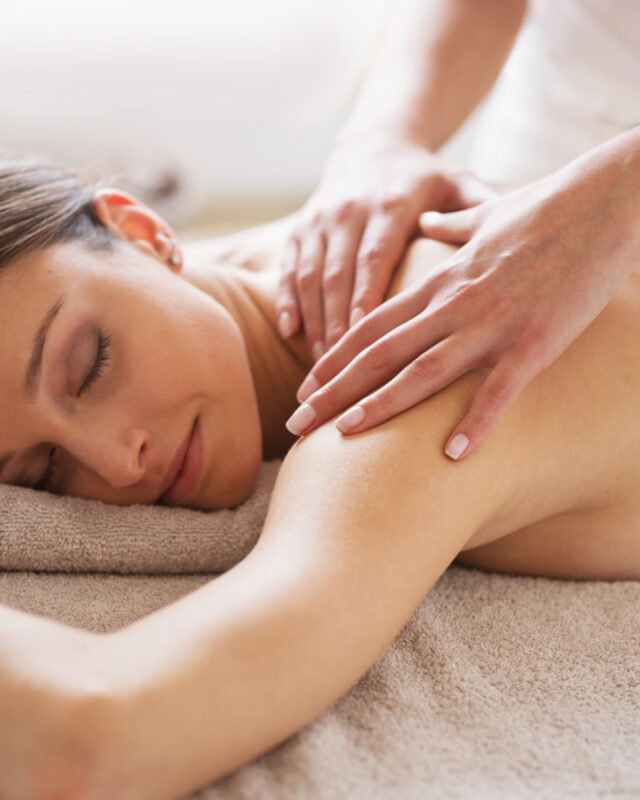
 Swedish Massage
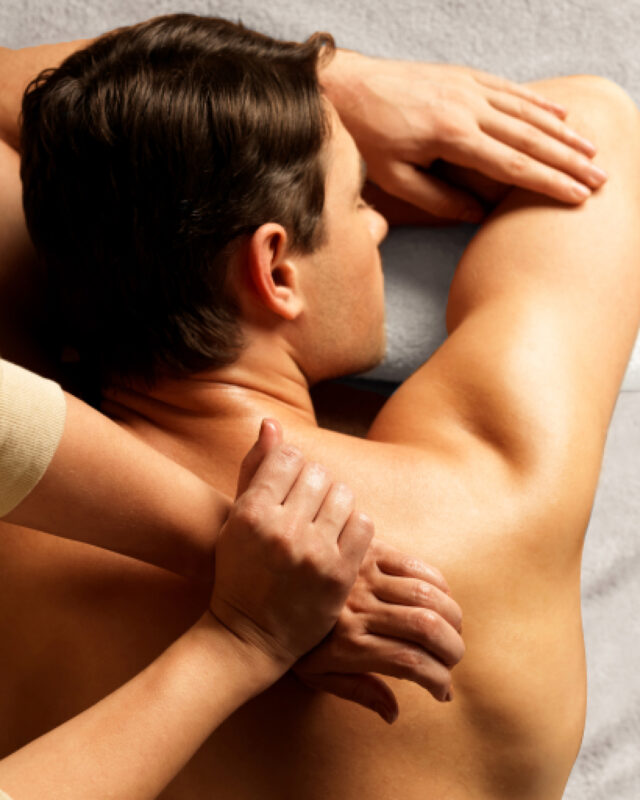 Deep Tissue Massage
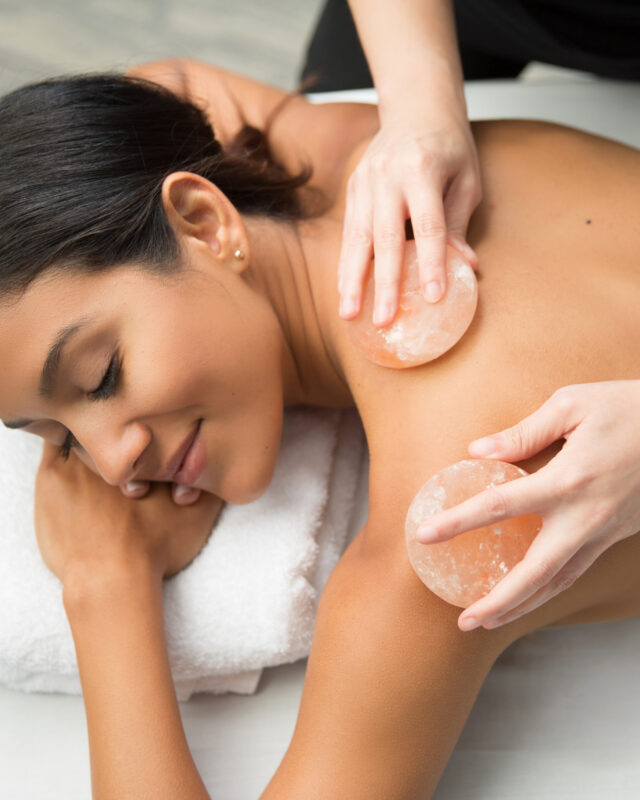 Himalayan Salt Massage
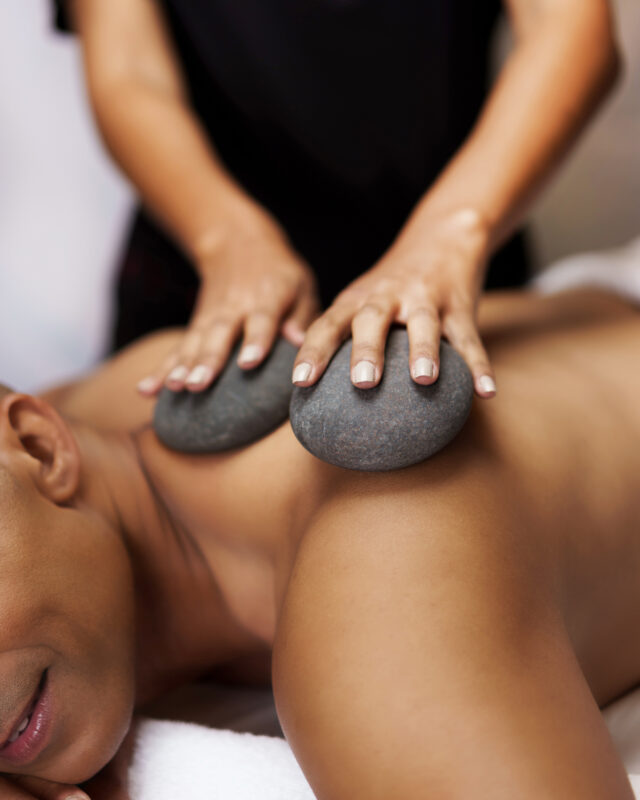 Hot Stone Massage
 Prenatal Massage
 Sports Massage
 Oncology Massage
 Specialty Massages
 Massage Enhancements
 Anti-Aging Facial
 Clearing Facial
 Hydrating Facial
 Brightening Facial
 Relaxation Facials
 Facial Enhancements
 Shape by Neveskin™
 Tone by Neveskin™
 Facial Toning by Neveskin™
 Hair Removal Services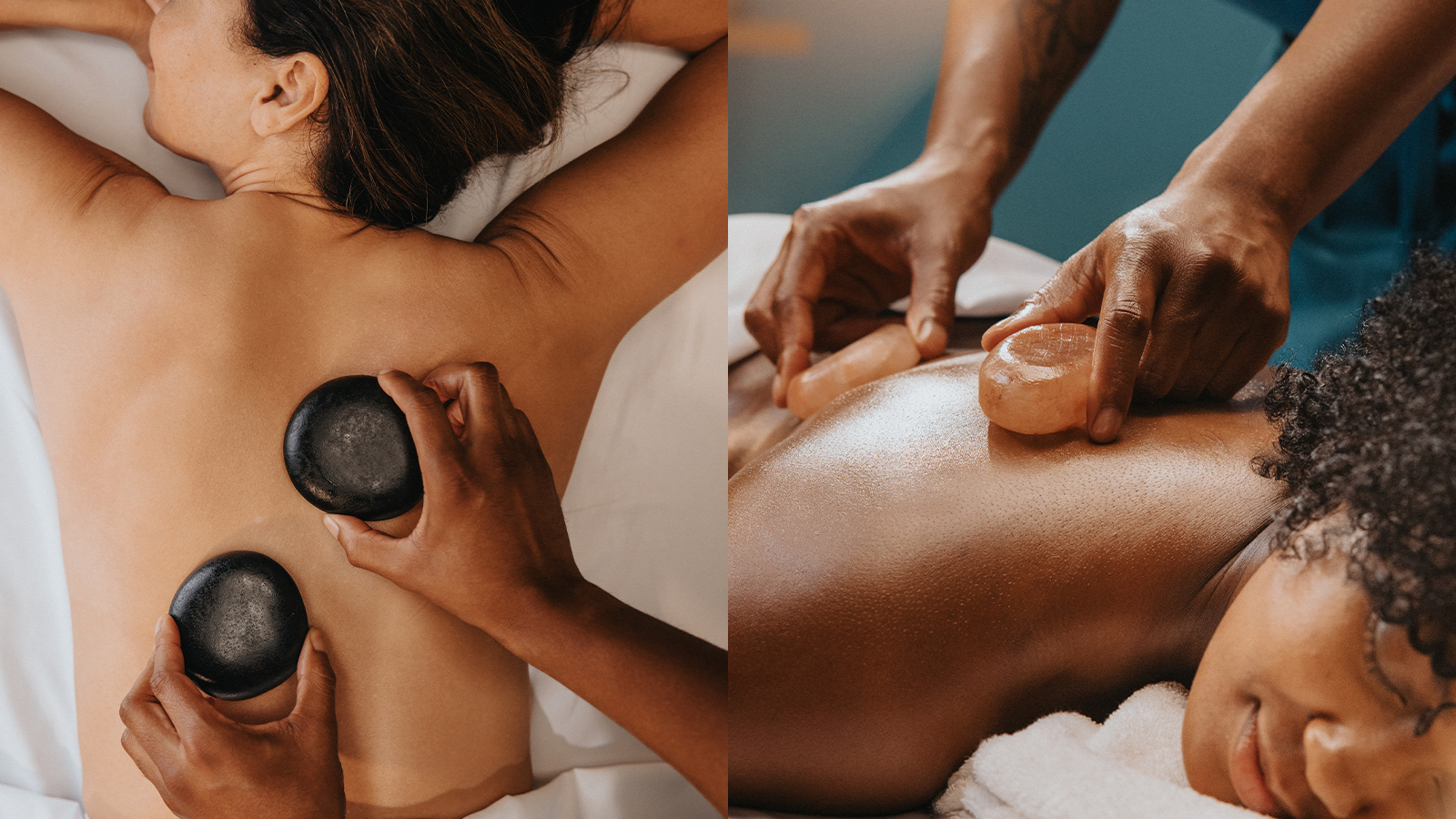



By Liz Zack
Choosing between Himalayan Salt Stone and Hot Stone massage is really a matter of preference. Both techniques use heat in combination with massage to deliver clinically proven relaxation and pain relief. Both should have you feeling a lot better after your treatment than you did before it. Here’s what to know about the two types of massage.
The important role of heat in massage
There is a reason warmth is so common in professional massage treatments: It’s a clinically proven way to get rid of muscle pain and tension. Research suggests that this combination doesn’t just help you relax, it boosts circulation, improves tissue elasticity and helps quiet your body’s ‘fight or flight’ response.
In a 2023 study, researchers compared heated massage to traditional physical therapy (without heat) and found that the heat-assisted massage was notably more effective when it came to improving mood and relaxation. This included a significant drop in stress hormones after four weeks of treatment, and depression scores that improved much sooner (at 2 weeks) compared to the physical therapy group (at 4 weeks).
What actually happens during each massage?
Both massages begin with a therapist consultation to make sure they’re aware of any particular issues you’re experiencing or any specific needs you might have. During the Salt Stone massage, your therapist will use large rounded salt stones heated to about 130 degrees, says Gillian Cahill, service, education and curriculum manager at Hand and Stone Spa, ”so it’s warm and wonderful, but not too hot.” The heat during this treatment is more of a diffused warmth rather than a deeply penetrating one.
A Hot Stone massage uses stones heated to 150 degrees, so the service will feel significantly warmer than a Salt Stone treatment. These stones are made of smooth basalt, a dense volcanic rock that stores heat and releases it slowly, making it excellent for soothing sore muscles.
Both salt and basalt stones are used to massage key parts of your body. It’s this combination of warmth and pressure that does the work.
Best candidates for a Hot Stone massage vs Himalayan Salt Stone massage
If you’re stuck deciding between the two, think about what you actually want out of your hour, says Cahill. Hot Stone is the better call if you’re hoping to work out real tension — the heat lets your therapist ease into tight muscles more effectively, so you get a deeper release without them having to dig in as hard by hand.
Himalayan Salt Stone, on the other hand, is a better fit if you want warmth without intensity. It’s also a great choice if your skin could use some attention: The salt’s naturally porous, slightly textured surface gives you a gentle exfoliation along with your massage.
How to communicate your pressure preferences to your therapist
“Your therapist is going to confirm pressure preferences with you during your initial consultation,” says Cahill, “but there will also be a few times during the treatment when they’ll be checking in with you.”
Your therapist’s goal is to provide the relief you need, and they rely on your feedback to get there. If you feel like the pressure is too firm or too light, speak up. Never feel awkward or uncomfortable about letting them know if you’d like any changes.
The takeaway
Ultimately, the choice comes down to what you’re hoping to get out of your massage time and there’s no wrong answer. Tell your therapist what you’re after, and they’ll help you land on the right treatment.
One more thing worth knowing either way: Massage benefits are cumulative. Cahill recommends booking a treatment about every four weeks, since the more consistently you go, the faster tension breaks down and the longer relief tends to last.